

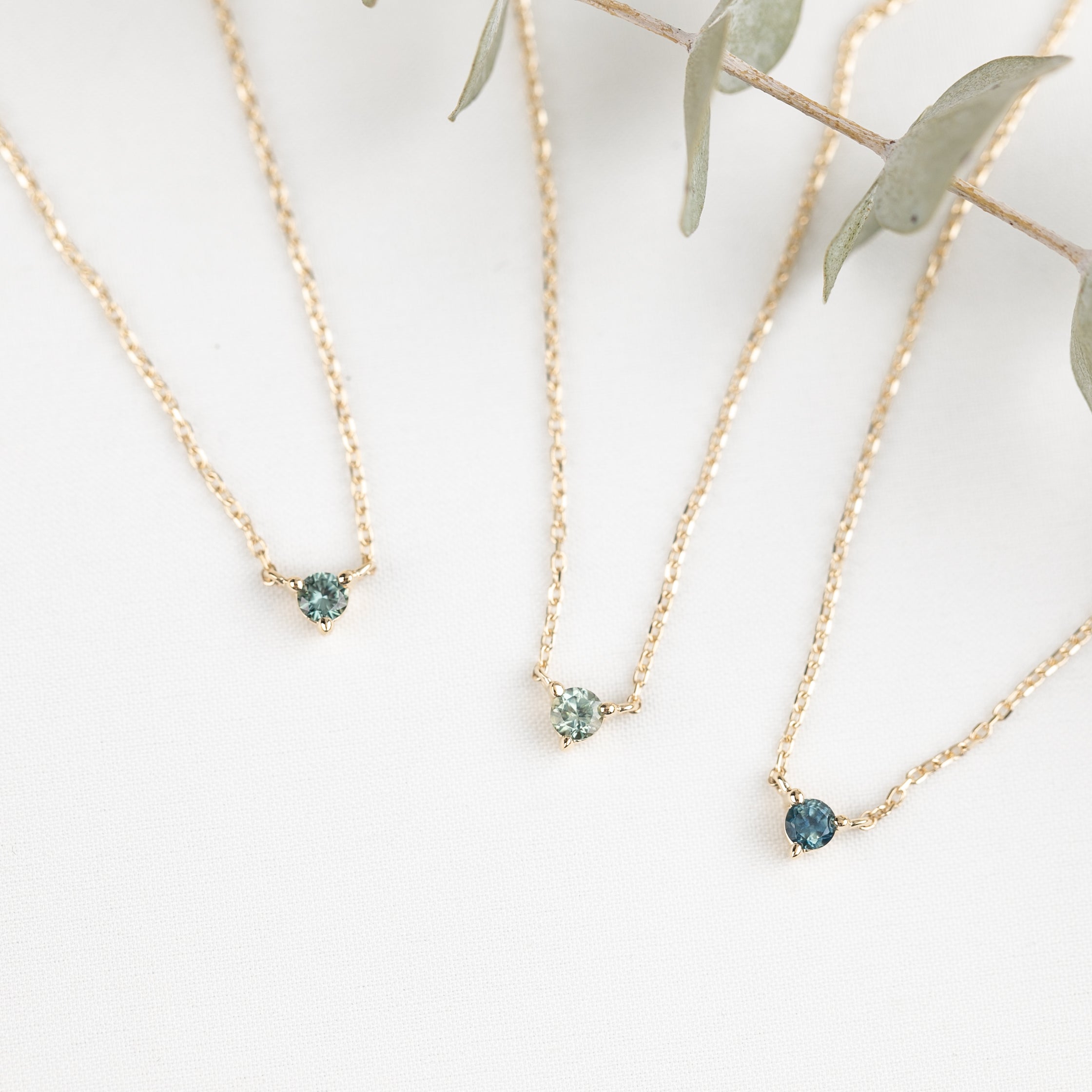
Born from Montana's wild landscapes, each precious sapphire holds a subtle, one-of-a-kind color crafted purely by nature.




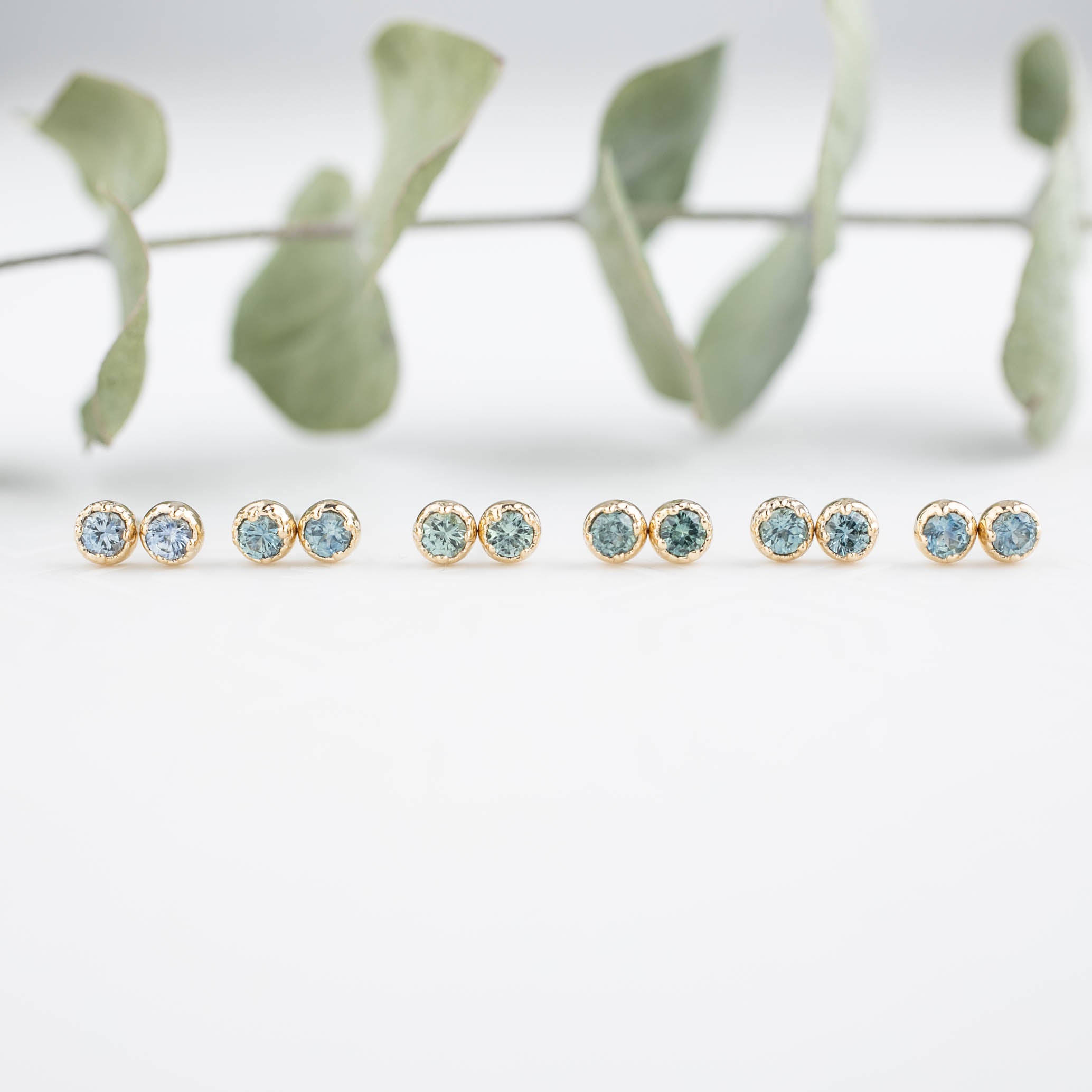


14K Gold Montana Sapphire Moon & Star Stud Earrings$ 570.00 USD
Design your own pair by selecting from beautifully matched Montana sapphires. These 14k solid gold moon and star stud earrings feature natural 3mm Montana sapphires accented wit...
History
Montana sapphires were first discovered in the 1860s by gold prospectors near Helena, who initially discarded the unfamiliar blue stones. Later discoveries at Yogo Gulch and Rock Creek established Montana as an important sapphire source.
Today, Montana sapphires are prized for their distinctive range of blues, greens, teals, pinks, and yellows. Rock Creek, the most productive deposit, is also where the majority of Envero’s Montana sapphires are sourced—giving each stone its own unique color and character.

Sustainable
Montana sapphire mining is relatively low-impact, with most stones recovered from shallow gravel deposits rather than through blasting or tunneling. At Rock Creek, water is recycled, mining is limited to small areas, and surrounding land and wildlife are largely left undisturbed.
After mining, the land is restored by backfilling soil and reseeding native grasses, with Montana requiring reclamation bonds to help ensure the work is completed.

Color
Distinguished from traditional blue sapphires, Montana sapphires possess an ethereal allure defined by a seamless blend of natural hues. Within a single stone, color often shifts and layers - a sapphire might open with a soft periwinkle at one edge and deepen into teal or forest green at the other, while nearby stones swing toward buttery yellow or lavender.
This isn't the result of dyes or treatments; it's simply how these gems formed, with trace elements in the earth coloring each stone uniquely as it grew. The effect is a palette that feels more like a watercolor wash than a single, uniform tone - which is exactly why Montana sapphire has become the gemstone of choice for those drawn to something quieter and more organic than a classic royal blue.
It's also worth noting that inclusions are a normal part of Montana sapphire - not a flaw to be alarmed by. Because these stones are natural and largely untreated, small internal characteristics are simply part of how they form. While Envero handpicks each stone for its beautiful color, minor inclusions are simply part of the Montana sapphire experience.


